Our Mission
Empowering
healing from trauma
Our Vision
Changing the world by strengthening community resilience one person at a time







Empowering
healing from trauma
Changing the world by strengthening community resilience one person at a time
Chronic stress and trauma can lead to adverse physical, emotional and mental health outcomes. Neuroscience tells us that resilience is key to managing the effects of stress and trauma. However, the demand for support has put our health systems under strain, making it difficult for many to access help. We believe that everyone deserves a baseline knowledge about trauma and stress, and should have access to fundamental resilience-strengthening skills.
Remarkably Resilient, Inc. exists to help all of us understand the effects of trauma and stress, and to empower everyone with the tools to improve their wellbeing.

Remarkably Resilient, Inc. works to achieve our mission and vision through education, awareness and practical skills provided through our three service lines: Remarkably Resilient Together®, Lived Experience and Trauma-Informed Education.
These service lines were developed by drawing on the lived experience of the Harnish sisters, coupled with their intense study of the neuroscience of trauma, leading to the discovery of the 5 Rs of Resilience.
Empowering people to strengthen their resilience is key to each of our service lines and our mission. Each of the 5 Rs has a key lesson to convey.

Children who have experienced trauma, and adults who carry the scars of that trauma, often experience a feeling of being out of control in response to triggers that may not bother other people. Some may withdraw or “check out” for long periods of time only to explode for seemingly inexplicable reasons. Learning how to recognize this and self-calm, or emotionally regulate, during these moments is a critical tool for building resilience.
Resilience strengthening skill: Practice regulation and self-care
Community call to action: Teach emotional regulation to everyone
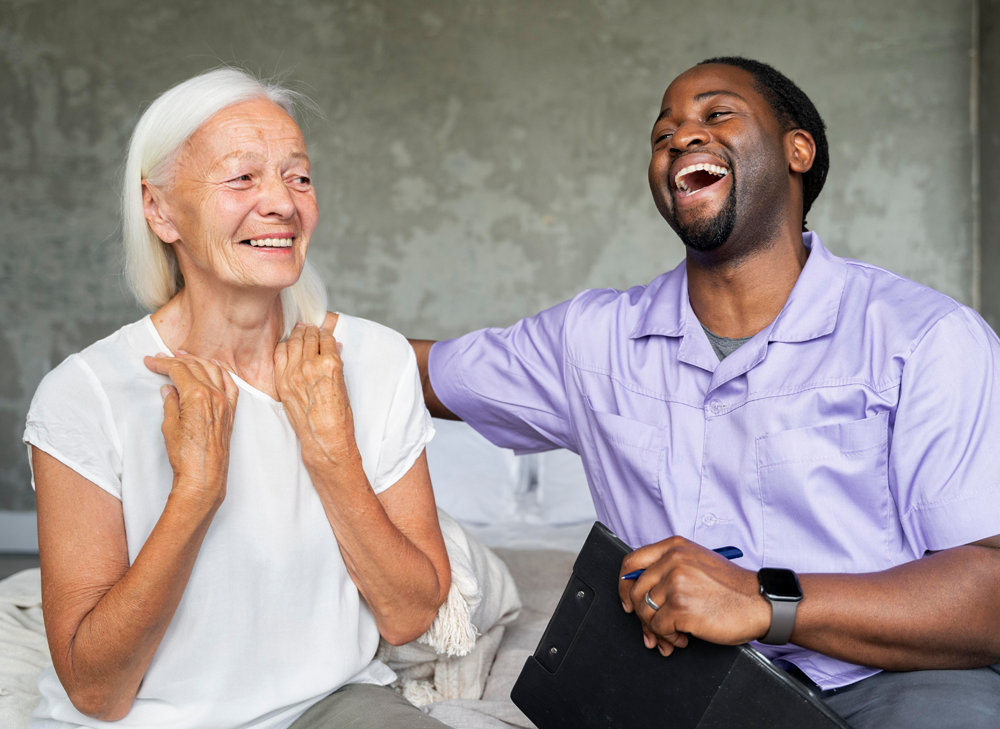
How we respond to survivors of trauma can either help them find a path to healing—or reinforce their trauma. Sometimes this is simply a matter of asking someone “What happened to you?” rather than the judgment-filled question, “What’s wrong with you?” Learn what lived experience informed by the science teaches us about trauma responses, coping mechanisms, and rediscovering your authentic self.
Resilience strengthening skill: Manage your trauma responses and examine your coping mechanisms
Community call to action: Respond with understanding and support
Remarkably Resilient stresses over and again that recovery is a journey—not a destination—and that every person’s recovery is unique. The different recoveries each Harnish sister has had attests to this. We hope communities will provide people the “spaces, places, and graces” they need to understand and heal from the trauma they’ve experienced.
Resilience strengthening skill: Embrace the journey of healing
Community call to action: Provide the spaces, places and graces for recovery

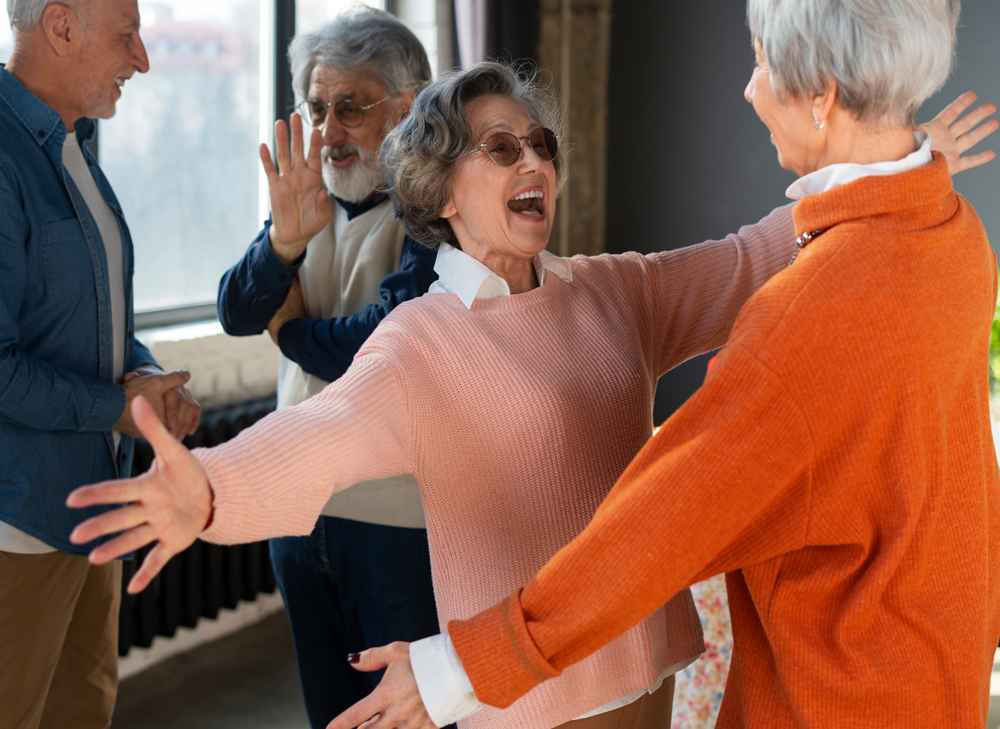
The Harnish sisters can attest to a fundamental principle backed by research into resilience: Healthy relationships are an essential part of the healing process. All it takes is ONE secure, significant, and consistently loving relationship to make a difference. Remarkably Resilient workshops help you explore ways to create these relationships.
Resilience strengthening skill: Cultivate your ones
Community call to action: Be the one
Often, we are so busy checking off our to-do lists and moving on to the next list that we miss the opportunity to build reflective capacity; that is, the ability to pause, step back, and reflect on the event, experience, interaction, or period of time. As a result, we may also miss the opportunity to gain a new perspective or insight that the reflective process can reveal.
Resilience strengthening skill: Practice the all-important intentional pause
Community call to action: Value the power of reflection


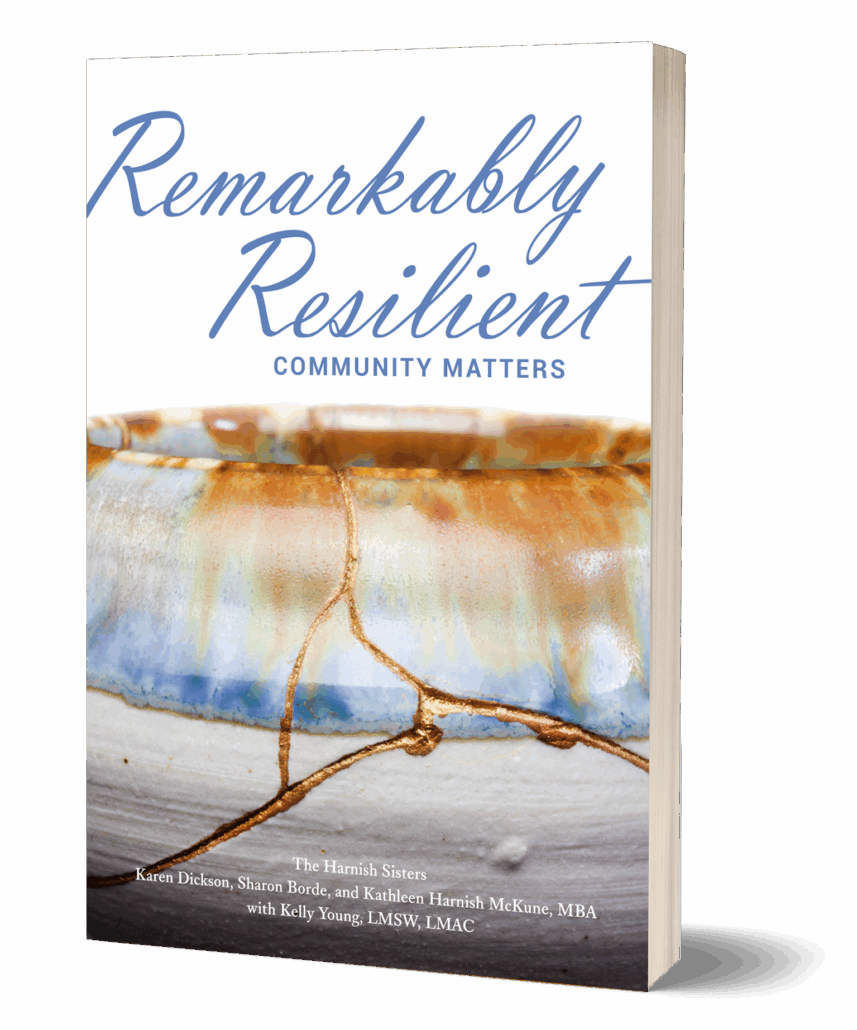
In their book, “Remarkably Resilient, Community Matters,” the sisters share their stories of resilience, informed by what they have learned about the neuroscience of trauma and through their lived experience. One of the most profound insights for the sisters was uncovering the paradigm shift that the neuroscience of trauma provides: from thinking “What is wrong with you?” to “What happened to you?”
This learning journey led to creating the Remarkably Resilient Together® community campaign to teach resilience, as well as a planned documentary, numerous workshops, keynote speeches, videos and more.
Now, as part of the larger Remarkably Resilient® organization, the sisters are focused on advocacy and resources for others with similar lived experiences. Their hope is to support other trauma survivors by helping them find their voices while providing information, skills and resources for healing.