


Respond with understanding and support.

RRT: Response, Recovery & Healing

Remarkably Resilient Together® was created to raise awareness about trauma and stress, its impacts on the brain and body and to provide practical resilience strengthening skills. Why is this important?

  • Trauma can cause us to stay silent, internalizing the traumatic event(s). Understanding can give us a voice and a path forward.
  • Unaddressed trauma is often the root cause of challenging behaviors we experience in ourselves, our families, organizations, and communities.
  • Knowledge helps all of us move forward with meaningful action.
  • We all know someone that is or has struggled with trauma. RRT is an accessible, effective resource to help yourself and/or someone you care about.

In this, our second RRT Guided Reflective Journal, we were compelled to combine two of the R’s of our Resilience Journeys: Response and Recovery.
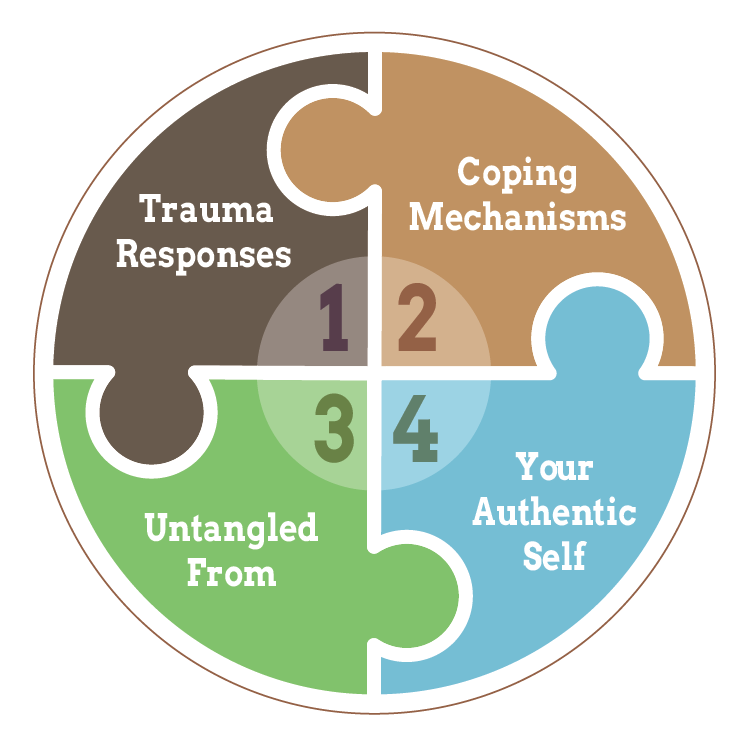
Response

Learning to recognize and manage trauma responses; Learning to recognize coping mechanisms – replacing less supportive ones with more supportive ones

Resilience strengthening skill: Manage your trauma responses and examine your coping mechanisms

Community call to action: Respond with understanding and support

Recovery

Understanding that recovery is a journey, not a destination. It is a roller coaster, not a straight line forward, with ups and downs, steps forward and steps backward. This knowledge allows us ALL to give grace to ourselves and to those we love that are riding their own recovery roller coasters.

Resilience strengthening skill: Embrace the journey of healing

Community call to action: Provide the spaces, places and graces for recovery

We do not choose our trauma. We are in charge of our healing.

RRT Guided Reflective Journal: Response, Recovery & Healing

Materials created for anyone & everyone

Guided Reflective Journal

This 89-page evidence-informed journal provides you with an opportunity to:
  • Recognize and manage trauma responses so they don’t take over your life.
  • Reflect on the coping mechanisms you have developed to help you manage stress and trauma and consider replacing less supportive ones with more supportive ones.
  • Examine phases of your life through the lens of trauma responses, coping mechanisms, positive supports, and safe, supportive relationships.
  • Discover your authentic self – those pieces of yourself you may have left behind when survival strategies took over.
  • Uncover the role of neuroplasticity in your recovery journey and empower your own healing.

Healing: All Four Pieces Matter

RRT: Response, Recovery, and Healing Bits of Wisdom

Neuroscience tells us that a trauma response happens when the human stress-response system is overwhelmed and not able to reset properly. Learning to manage trauma responses is part of the recovery and healing journey.

Coping mechanisms are not weakness: they are evidence of protection. However, what once protected you may no longer serve you. The question becomes, “Is this still helping me – or costing me?”

How we manage trauma dictates how we recover. With knowledge and support, we are capable of anything we set our minds to.

Healing is allowing your authentic self to come through untangled from your trauma responses & less supportive coping mechanisms.

The 5 Rs of Resilience

REGULATION